Sauces · Italian-American
Alfredo Sauce
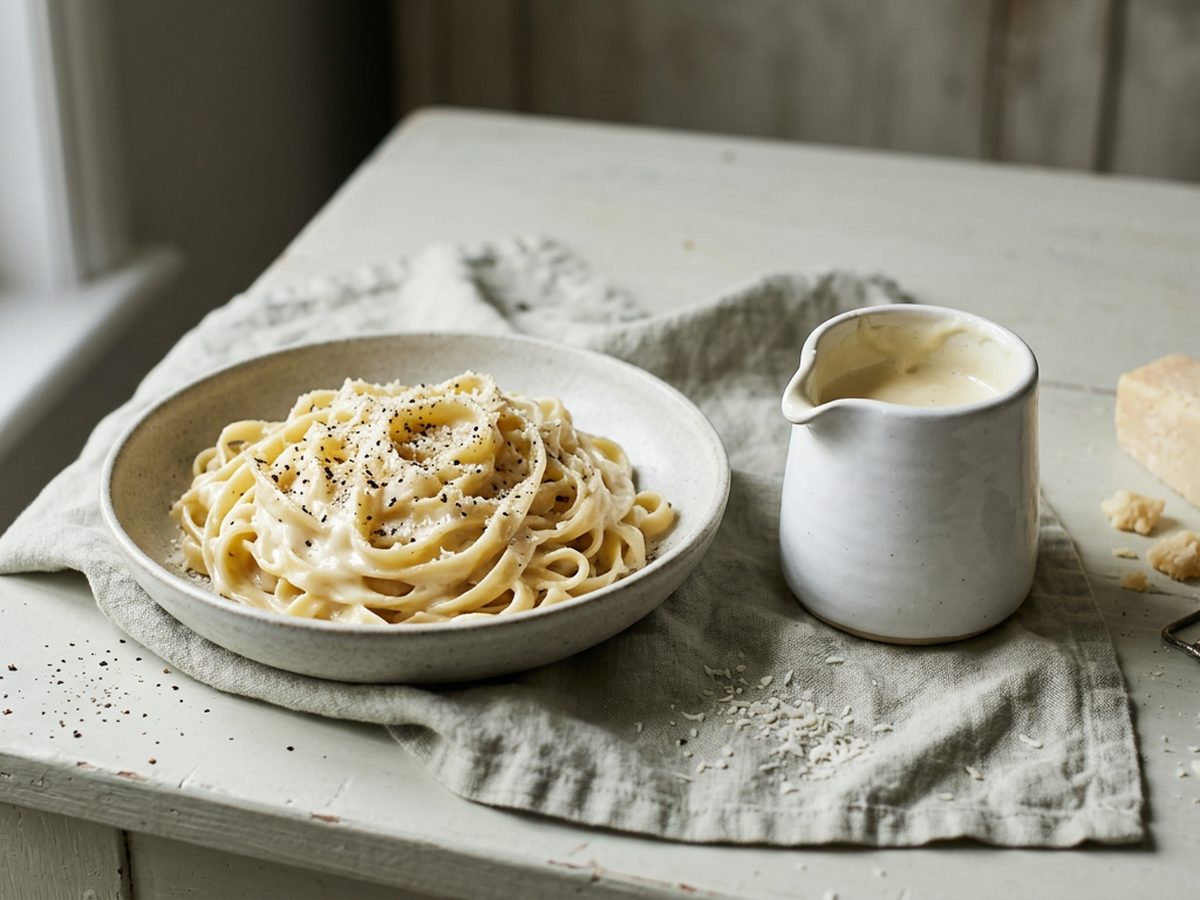
Butter, cream and a mountain of Parmesan. Ten quiet minutes and dinner feels fancy.
- Hands-on
- 15 min
- Total
- 15 min
- Makes
- 2 cups sauce (enough for 450 g / 1 lb pasta)
- Serves
- 4
- easy
- pasta-sauce
- weeknight
- stovetop
Verified against at least two trusted test kitchens or food-safety guides · Last checked · What this means
Scaling? Doubles or triples in a larger heavy saucepan. A bigger batch takes longer to melt, so keep the heat low and add the cheese a handful at a time. The pasta water you need doesn't scale exactly; add it little by little. Some items (like eggs) don’t halve neatly: beat them, then measure out half.
Ingredients
You need: box grater or rasp grater · heavy saucepan or deep skillet · whisk · large pot for pasta · colander · heatproof mug for pasta water · tongs
Contains: milk · wheat
Method
Grate the cheese
Finely grate 200 g (2 cups) Parmesan from a block. Set it next to the stove.
Otto tried this firstOtto tips in a tub of powdery pre-grated cheese and gets a gritty sauce. Pre-grated cheese can contain additives that hurt the texture, so he goes back to a block and a grater.Cook the pasta
Boil 450 g (1 lb) pasta in a big pot of salted water for the time on the packet. Before you drain it, scoop out 120 ml (1/2 cup) of the cooking water and set it aside.
Ready when: Pasta is tender but still a little firm when you bite a piece. Start tasting a minute before the packet time.
Warm the butter and cream
While the pasta cooks, put 113 g (1/2 cup) butter and 240 ml (1 cup) cream in a heavy saucepan over medium-low heat. Stir until the butter melts.
Ready when: Butter fully melted and the cream steaming, with only tiny bubbles at the edge. Don't let it boil hard: overheating can make the sauce separate.
Melt in the Parmesan
Add a little pepper, then whisk in the 200 g Parmesan one handful at a time, letting each handful melt before adding the next. Take the pan off the heat as soon as it's smooth.
Ready when: No shreds of cheese left; the sauce is smooth, glossy and coats the back of a spoon. Taste, then add salt only if it needs it.
Toss with the pasta
Add the drained pasta to the sauce and toss with tongs. If it's too thick, stir in the saved pasta water 1-2 tablespoons at a time. Serve right away.
Ready when: Every strand looks glossy and coated, with no oily puddle in the bottom of the pan.
Make ahead, store & reheat
- Make ahead
- You can make the sauce ahead, cool it and refrigerate it, then cook the pasta fresh just before serving.
- Storage
- Get leftovers into the fridge within 2 hours (1 hour if the room is above 32°C / 90°F), in a covered container, and eat them within 3-4 days. Store sauce and pasta separately if you can; the pasta soaks up the sauce. Freezing isn't recommended: the texture suffers.
- Reheat
- Warm the sauce in a small pan over low heat, stirring often, and add 1-2 tablespoons of cream or milk if it's too thick. Heat until steaming hot all the way through, 74°C (165°F).
If something goes wrong
- Sauce looks oily or separated
It got too hot or cooked too long. Take it off the heat and whisk in 1-2 tablespoons of warm cream. Next time, stop as soon as it's smooth. - Grainy or stringy sauce
Use Parmesan grated from a block, not pre-grated, keep the heat low, and add it a handful at a time. - Too thick to coat the pasta
Loosen it with the saved pasta water, 1-2 tablespoons at a time.
Good to know
- A heavy pan helps stop the cream from scorching on the bottom.
- Garlic version: cook 2 minced garlic cloves in the melted butter for about 30 seconds, until fragrant, before adding the cream.
Safety
- Draining pasta: pour away from you and keep your face back; the steam can burn. Kids should leave the draining to an adult.
- Hot cream can scald. Turn the pan handle inward so it can't be knocked.
- Many fresh and some dried pastas contain egg. Check the packet if you are cooking for someone with an egg allergy.
- Don't leave the sauce out more than 2 hours; it contains dairy.