Mains · Italian-American
Fettuccine Alfredo
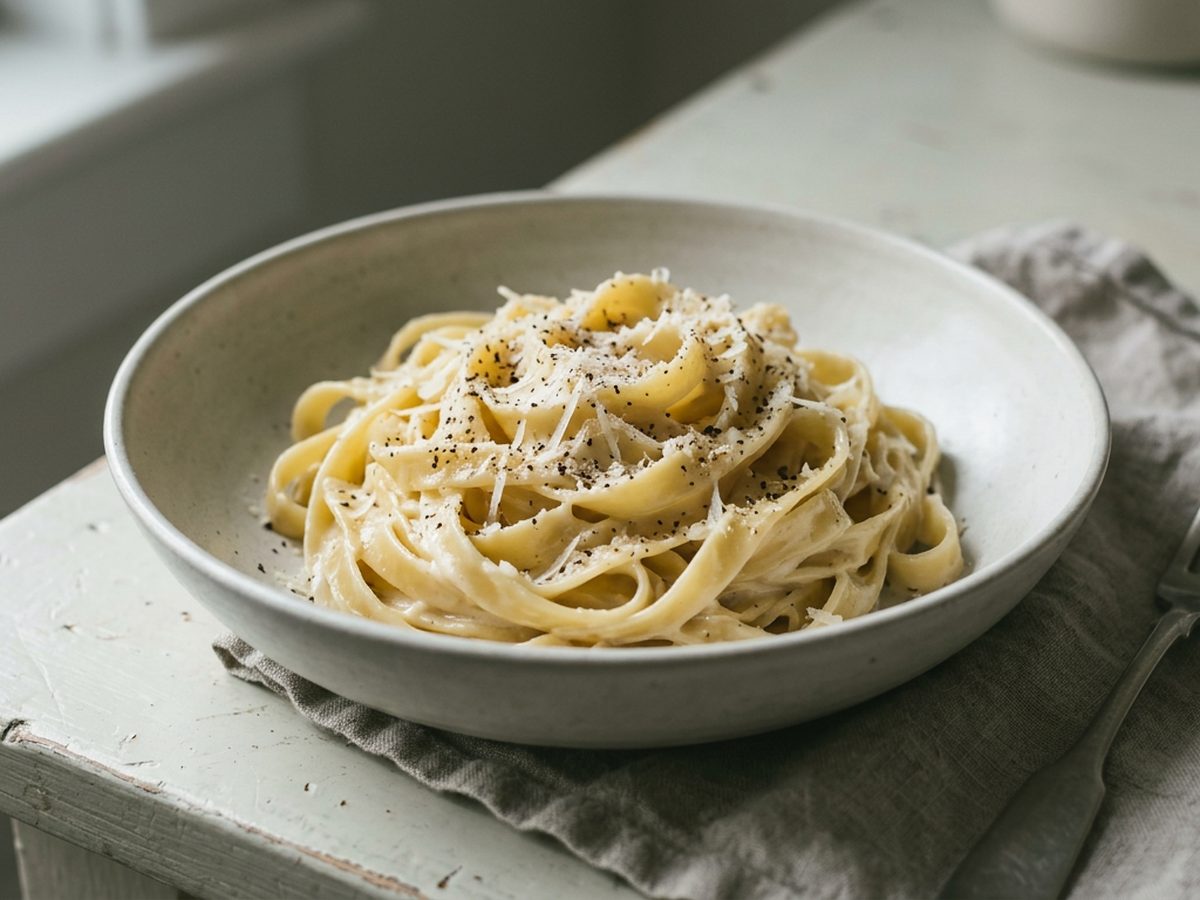
Cream, butter, Parmesan and fresh pasta. Serve it right away, while it's still glossy.
- Hands-on
- 30 min
- Total
- 30 min
- Makes
- 4 servings as a main (4 to 6 as a first course)
- Serves
- 4
- easy
- quick
- weeknight
- date-night
Verified against at least two trusted test kitchens or food-safety guides · Last checked · What this means
Scaling? Only the 255 g (9 oz) amount is given. The cream-reducing time depends on how much cream is in the pan, so if you scale up, go by volume (reduce 1 cup to 2/3 cup), not by the clock. Some items (like eggs) don’t halve neatly: beat them, then measure out half.
Ingredients
You need: large stockpot or Dutch oven · large saucepan · ladle or heatproof measuring cup · liquid measuring jug · colander · tongs · serving bowls
Contains: milk · wheat · egg
Method
Boil the water, warm the bowls
Bring the 4.3 liters (4 1/2 quarts) of water to a rolling boil in a large pot. Ladle about 120 ml (1/2 cup) of the boiling water into each serving bowl to warm it, then set the bowls aside.
Ready when: A rolling boil: big bubbles that keep going even when you stir.
Reduce the cream
While the water heats, bring 1 cup (240 ml) of the cream and the 2 tbsp butter to a simmer in a large saucepan over medium heat. Turn the heat to low and simmer gently for 12 to 15 minutes.
Ready when: The cream has reduced to 2/3 cup (160 ml), about a third less than you started with.
Stir in the rest of the cream
Take the pan off the heat and stir in the remaining 1/2 cup (120 ml) cream, the 1/2 tsp salt and the 1/2 tsp pepper.
Ready when: The sauce is smooth and evenly mixed; it stays off the heat until the pasta is ready.
Cook the pasta slightly underdone
Add the 1 tbsp salt and the 255 g (9 oz) fettuccine to the boiling water. Cook it until it's just short of al dente. Save 1/4 cup (60 ml) of the cooking water, then drain the pasta.
Ready when: Still a little too firm to eat. It will finish cooking in the sauce. Fresh pasta usually needs only a few minutes; check the packet.
Otto tried this firstOtto cooks the fettuccine until it's soft. After another minute or two in the sauce it turns limp, so the cue is to pull it out a little early.Toss in the sauce
Bring the cream back to a simmer over medium-high heat, then turn it to low. Add the drained pasta, the 3/4 cup (43 g) Parmesan and the 1/8 tsp nutmeg, and toss with tongs over low heat for 1 to 2 minutes.
Ready when: The sauce coats the pasta, the cheese has melted, and the pasta is now just al dente.
Loosen and serve now
Stir in the 1/4 cup (60 ml) saved pasta water. The sauce will look thin but tightens as it sits and is served. Tip the water out of the warm bowls, share out the pasta and toss to coat. Serve straight away.
Swaps
- Instead of fresh fettuccine: dried fettuccine It works, but dried noodles hold the sauce less well than fresh. Cook them by the packet time and drain just before al dente, since they finish in the sauce.
Make ahead, store & reheat
- Storage
- Best eaten straight away: this dish doesn't hold or reheat well. If you do have leftovers, cool them, refrigerate within 1 to 2 hours, and eat within 48 hours.
- Reheat
- Reheat gently until steaming hot all the way through, 74°C / 165°F, and only once. The sauce may not come back as smooth as it was.
If something goes wrong
- The sauce looks too thin when you serve it
That's expected. It tightens as the pasta is served and eaten. Don't keep cooking it on the stove. - The sauce has gone thick and tight
Stir in a little more of the saved pasta water, a splash at a time, until it coats the noodles loosely again. - Mushy pasta
Next time, drain it a little before it's al dente. It cooks for another minute or two in the sauce.
Good to know
- Grate the Parmesan finely so it melts quickly into the cream.
- Warm the bowls with a ladle of the hot pasta water, then tip it out; a warm bowl keeps the sauce from setting too fast.
Safety
- Ladling boiling water and draining a big pot both carry a scald risk. Pour away from yourself, use a heatproof ladle, and kids should leave these steps to an adult.
- Fresh fettuccine is usually made with egg. Check the packet for allergens.
- Traditional Parmesan is made with animal rennet. If you need a vegetarian dish, use a vegetarian hard cheese.