Breakfast · Global
Soft Scrambled Eggs
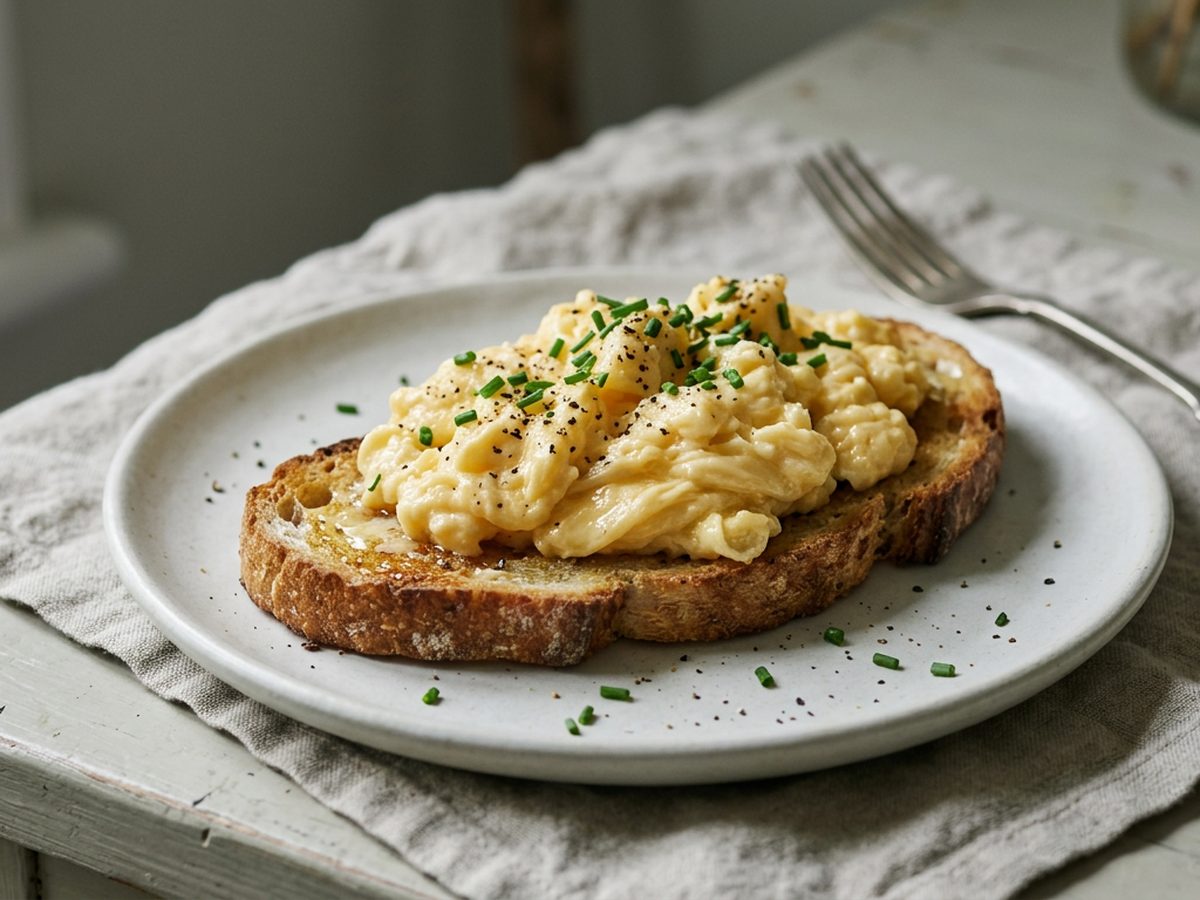
Big, soft, fully cooked curds - low heat and a lazy spatula do the work.
- Hands-on
- 7 min
- Total
- 7 min
- Makes
- 1 serving
- Serves
- 1
All hands-on: 2 minutes to whisk, about 5 at the stove.
- easy
- vegetarian
- kid-friendly
- one-pan
- quick
Verified against at least two trusted test kitchens or food-safety guides · Last checked · What this means
Scaling? Plan on 2 large eggs per person (2 to 3 for big appetites). For a big batch, a tablespoon or two of milk per 2 eggs helps keep them from drying out. Some items (like eggs) don’t halve neatly: beat them, then measure out half.
Ingredients
You need: non-stick skillet · small bowl · whisk or fork · silicone spatula
Contains: egg · milk
Method
Whisk
Beat the eggs with the salt, pepper and milk (if using) until the mixture is one even yellow.
Melt the butter
Melt the butter in the skillet over medium heat.
Ready when: The butter is bubbling but not brown.
Go low
Pour in the eggs and turn the heat down to medium-low. Leave them alone until the bottom starts to set.
Ready when: The bottom is starting to set.
Make big curds
Slowly push the spatula across the bottom and sides of the pan so the set egg folds into large, soft curds. Pause between pushes.
Ready when: Large, soft curds are forming.
Otto tried this firstOtto stirs like he's mixing cement - stirring nonstop breaks the eggs into tiny bits instead of soft curds.Know when to stop
Keep folding until the eggs have thickened and there is no liquid egg left anywhere, but they still look moist, not dry. Take the pan off the heat and serve right away.
Ready when: Thickened, with no visible liquid egg anywhere, but still moist; egg dishes are done at 71°C (160°F).
Otto tried this firstOtto waits until the eggs turn rubbery - the hot pan keeps cooking them even after the heat is off, so stop once the liquid is gone.
Swaps
- Instead of butter and milk: cooking spray and water A lighter version.
- Instead of milk: water (about 1 tbsp per egg) or a little cream Water makes them lighter; cream makes them richer.
Make ahead, store & reheat
- Make ahead
- Best served the moment they're done. If they must wait a few minutes, set the skillet over a pan of hot water instead of on the burner.
- Storage
- Best eaten right away. Leftovers go in the fridge within 2 hours (1 hour if it is above 90°F / 32°C) and keep 3 to 4 days; reheat until steaming hot, 165°F (74°C).
- Reheat
- Reheat leftovers until steaming hot, 74°C (165°F).
If something goes wrong
- Rubbery, dry eggs
The heat was too high or they cooked too long. Use medium-low and take them off as soon as the liquid egg is gone; the hot pan keeps cooking them. - Watery eggs
Overcooking squeezes water out of the egg. Lower the heat and stop sooner. - Greenish eggs
That's a harmless reaction with a cast-iron pan. Use a non-stick skillet.
Good to know
- Want bigger curds? Let the eggs sit a little longer between pushes. Smaller curds? Move them more often.
- Avoid cast iron: eggs scrambled in it can turn a harmless but odd greenish color.
- Sprinkle a little shredded cheddar, Monterey Jack or mozzarella over the eggs just before serving.
Safety
- Scrambled eggs should not be runny. Eggs can carry Salmonella, so cook until no liquid egg remains in the pan.
- Raw egg can spread germs: wash your hands, tools and counter with hot soapy water after cracking and whisking eggs.
- Hot pans and sizzling butter can burn: turn the pan handle inward, and kids should cook with an adult beside them.